


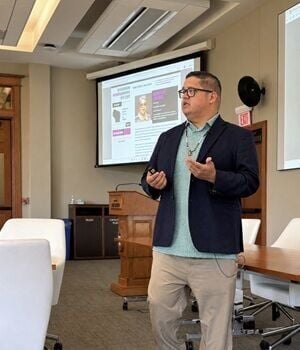
November marks Native American Heritage Month, an opportunity to honor the histories, cultures, sovereignty, contributions, and ongoing influence and contemporary experiences of Tribal Nations, communities, and Indigenous peoples in Wisconsin and across the United States. While the month provides a designated time for recognition, meaningful engagement with Indigenous histories and perspectives should not begin and end in November. David J. O'Connor, American Indian Studies Indigenous Student Support Consultant at the Wisconsin Department of Public Instruction, explains why this learning matters year-round and how educators can move beyond recognition to deeper understanding.
“Teaching Indigenous histories, cultures, treaties, sovereignty, narratives, and perspectives throughout the year helps educators naturally include these topics and issues as part of the curriculum rather than a one off or something only relevant during commemorative events, such as Indigenous Peoples Day or Native American Heritage Month,” O’Connor said. “By doing this, educators can help guide students in their learning on Tribal Nations and Indigenous people's traditions, heritages, languages, and values while challenging misunderstandings and misconceptions.”
People are also reading…
O'Connor says that the shift to deeper understanding begins with making an important distinction between teaching about cultures and teaching culturally.
To help educators move from simply informing students to fostering a deeper understanding, O'Connor developed a framework he refers to as the "four I's":
- Inform — The first stage is where educators are just acknowledging or being notified of what they are required to know or to do to fulfill the requirements, such as those under Wisconsin Act 31.
- Include — In this stage, an educator does not yet feel fully comfortable or fluent with the content but adds resources to their curriculum as they are introduced to them. This could include PBS Wisconsin Tribal Histories and Biographies, Wisconsin Historical Society's Native People of Wisconsin book, or a guest speaker.
- Integrate — In this stage, the educator begins to build on their knowledge base, plugging resources in at different times of the year and into different parts of the curriculum. Perhaps they still question themselves here or there because either their content or resources are still externalized.
- Infuse — Finally, in this stage, an educator naturally shares knowledge and resources throughout the year. The educator trusts their instincts and trusts their students to move forward with them.
“Start with what you already know about different topics and issues on American Indian Studies and remain open to continuous learning,” O’Connor said. “Teaching culturally means recognizing your role as an educator and guide while understanding that learning with students is a two-way process in which you all learn from one another. I encourage educators to unpack, unlearn, and relearn before diving into the content regardless of the subject area. As educators, you do not need to know everything but understand that building foundational knowledge is an ongoing process, and you will continue to develop and deepen your understanding over time if you put in the work to grow your teaching and learning opportunities.”
Resources
- Educators interested in learning more about how to recognize Tribal Nations’ and Indigenous peoples, histories, cultures, and tribal sovereignty in their own classrooms can find more resources below.
- The DPI’s American Indian Studies Program webpage is full of resources for Wisconsin educators and learners.
- The Wisconsin First Nations Education website will expand your learning journey with its primary source materials, lesson plans, videos, and professional learning tools available for all grade levels.
- PBS Wisconsin’s First Nations Stories share the histories, cultures, and voices of Wisconsin’s First Nations and Indigenous communities.
- Native Knowledge 360 from the Museum of American Indian shares resources with educators about American Indian Nations and people.
- National Council for the Social Studies offers resources for teaching and learning about Indigenous Peoples Day.
Observances and events
- November 1–November 30: National Native American Heritage Month
- November 8–15: Rock Your Mocs
- November 11: Veterans Day
- November 19: Red Shawl Day
- November 28: Native American Heritage Day
Explore Tribal Nations of Wisconsin websites, school district websites, colleges and universities, libraries, and museums to find local events, activities, and educational programming available in your area.


