


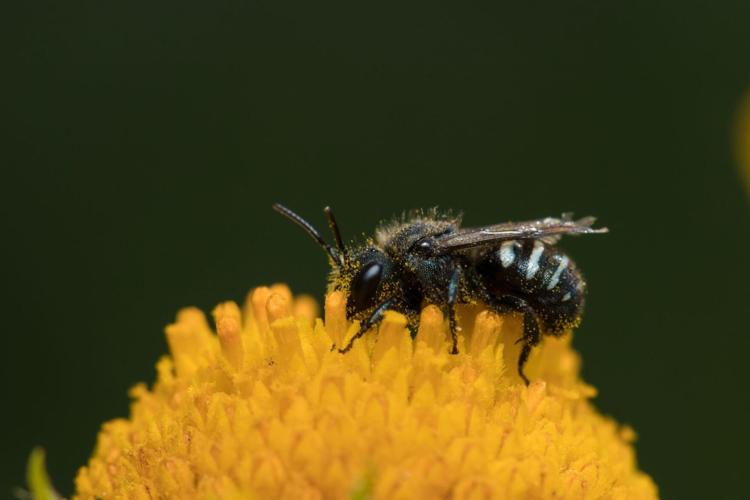
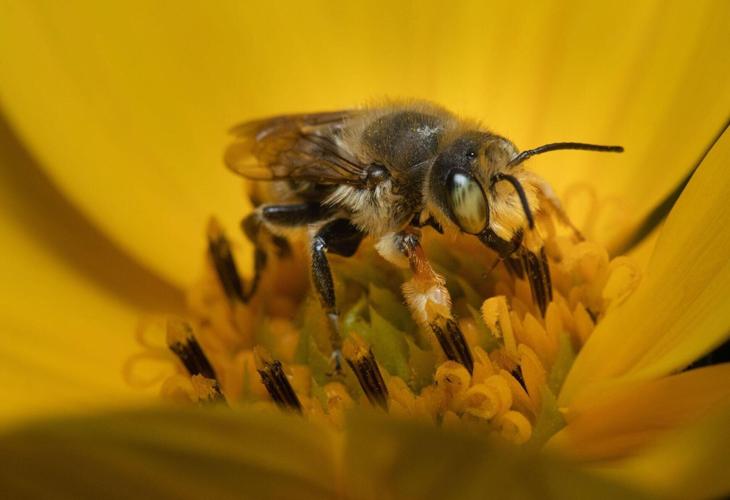
CORVALLIS, Ore. — Oregon State University Extension Service and its partners have released Bees of Oregon: 2025, the first report of its kind in North America to provide a statewide look at bee biodiversity, honey bee colony health and practical steps Oregonians can take to support pollinators.
“Oregon has built one of the strongest bee survey and education networks in the country. The public value is that we can now give people better information for protecting bees, improving habitat and making informed decisions in every part of the state.”
The report brings together years of work by the Oregon Bee Project, OSU Extension bee programs and Oregon Bee Atlas participants. It identifies the most common and most rare bees in Oregon’s ecoregions, the plants they use, top plant picks for every county and the species documented by the Oregon Bee Atlas.
People are also reading…
The report also summarizes honey bee colony survival trends and the scale of Oregon’s volunteer-powered bee inventory, which now includes hundreds of documented species and hundreds of thousands of specimen records.
“This report gives Oregon something it has never had before: a clear, statewide picture of its bees and the plants they depend on,” said Andony Melathopoulos, associate professor and statewide Extension pollinator health specialist. “It turns years of Extension education, agency collaboration and volunteer science into information that gardeners, land managers, farmers and communities can actually use.”
Report grew from statewide collaboration
The report builds on the Oregon Bee Project, a collaboration that grew out of the 2014 Legislative Task Force on Pollinator Health. The task force found that Oregonians needed better education and information to protect bees while continuing work in agriculture, forestry, transportation, landscaping and other fields.
Under Oregon law, OSU Extension was charged with developing specialized pollinator programming and coordinating work across state leadership. The Oregon Bee Project includes Oregon State, the Oregon Department of Agriculture, Oregon Department of Transportation and Oregon Department of Forestry. Its work focuses on reducing pesticide exposure, increasing habitat and slowing the spread of exotic bees, and pests and diseases affecting bees.
OSU bee programs that contributed to the report include Honey Bee, Pollinator Health, Oregon Master Beekeeper, Master Melittologist and Bee Stewards. Master Melittologists also played a central role by collecting and documenting bees across the state through the Oregon Bee Atlas.
Since the Oregon Bee Project began, more than 12,000 licensed pesticide applicators have been trained on bee protection provisions on pesticide labels. The project also has supported habitat education through public programs, regional native plant cards, seed packets and the Bee Stewards program.
The Oregon Bee Atlas has grown into North America’s largest contemporary state bee inventory. Supported by the nation’s first Master Melittologist Extension program, the Atlas relies on trained volunteers to document bee diversity and bee-plant relationships across Oregon.
“The Atlas works because volunteers have been trained to collect high-quality data across a very large and ecologically diverse state,” said Lincoln Best, an OSU faculty research assistant, educator for the Master Melittologist Program and taxonomist for the Oregon Bee Atlas project. “That gives us a much sharper view of where bees occur, what flowers they use and where future survey work is still needed.”
The report also arrives during a transition for the Oregon Bee Project. Since 2023, Oregon’s “Pollinator Paradise” license plate has generated more than $800,000 to support a bee taxonomist position and honey bee disease diagnostic positions at OSU. At the same time, federal support for a coordination position will end in May 2027, creating a funding gap for the project’s education and coordination work.
Data show Oregon’s bee diversity
Bees of Oregon: 2025 presents 567 bee species documented by the Oregon Bee Atlas, while DNA barcoding provides evidence of nearly 200 additional species. More species are likely to be identified as collected specimens are processed and as survey work continues in Oregon’s varied landscapes.
The report includes a species list from bees collected since 2017, ecoregional summaries of common and uncommon bees, and information about plants used by bees in each ecoregion. The Blue Mountains ecoregion currently has the highest documented diversity in the state, with 418 species.
The report also points to places where much remains to be learned. In the Columbia River Plateau alone, more than 100 species are likely still undetected.
For gardeners and land managers, the report translates bee survey data into practical guidance. It includes top plant picks for every Oregon county and information that can help communities make more precise habitat decisions.
“This is not just a species list,” Best said. “It is a tool for understanding Oregon’s bee fauna in relation to the landscapes and plants that support them. That makes it useful for conservation planning, restoration work and everyday decisions about what to plant.”
The report also summarizes honey bee colony loss data compiled by the OSU Honey Bee Lab, which has tracked colony health through surveys of commercial and hobby beekeepers since 2010.
Over that period, colony losses have declined among hobby beekeepers but increased among commercial beekeepers. Across the full survey period, commercial losses remained lower than hobbyist losses, at 22% compared with 36%. Preliminary results for the 2025-26 season show hobbyist losses at 22%, with commercial data still pending.
“Honey bees remain essential to Oregon agriculture, and colony loss data help us understand the pressures beekeepers are facing,” said Ramesh Sagili, professor of apiculture, Extension honey bee specialist and director of the OSU Honey Bee Lab. “Tracking those trends over time helps Extension target research, education and diagnostic support where they are most needed.”
Report guides bee protection statewide
The report gives Oregon agencies, communities, farmers, land managers and residents a shared foundation for protecting bees. It connects statewide survey work with practical recommendations for habitat, pest awareness, pesticide education and honey bee health.
The data are already informing new conservation tools, including Melittoflora, an online resource designed to help Oregon make more precise investments in bee habitat. By showing which bees are found in each region and which plants they use, the report helps move pollinator conservation from general recommendations to Oregon-specific decisions.
Melathopoulos said the report reflects what Extension can do when public agencies, university programs and trained volunteers work toward a common goal.
“Oregon has built one of the strongest bee survey and education networks in the country,” Melathopoulos said. “The public value is that we can now give people better information for protecting bees, improving habitat and making informed decisions in every part of the state.”
Funding and support for Oregon Bee Project and Oregon Bee Atlas work has come from the Oregon Department of Education; Oregon Department of Transportation; Oregon Department of Agriculture; Oregon Department of Forestry and the OSU Agricultural Research Foundation.
Funding also has come from the U.S. Environmental Protection Agency; U.S. Department of Agriculture programs including the National Institute of Food and Agriculture, Agricultural Marketing Service and Natural Resources Conservation Service; Western Sustainable Agriculture Research and Education; Western Integrated Pest Management Center; U.S. Fish and Wildlife Service; Project Apis m.; and the Foundation for Food and Agriculture Research.


