

If you make a purchase after clicking on links within this article, Lee Enterprises may earn affiliate commissions. The news and editorial departments had no role in the creation or display of this content.
Most men don’t suddenly go bald. Hair loss usually shows up as a slow downgrade — hair gets finer, holds less shape, looks flat under light, and starts behaving differently long before anyone would call it “balding”. By the time most guys notice it properly, it’s already been going on for years.
Genetics may do most of the heavy lifting, but they’re not acting alone. Chronic scalp irritation, inflammation, hormone signalling (mainly DHT), stress, and years of using aggressive supermarket shampoos might all stack the deck against you. And most men are unknowingly making things worse every time they wash their hair.
People are also reading…
Setting expectations straight: No shampoo in 2026 is regrowing dead follicles. If the follicle is gone, it’s gone. Anyone claiming otherwise may be pulling your leg.
What a good shampoo may do is stop accelerating the loss, reduce unnecessary shedding, improve hair quality, and keep the follicles you still have in a healthier state for longer.
The problem is that some “hair loss shampoos” are badly formulated. They rely on sulfates for foam, fragrance for appeal, and vague plant extracts for the label — all while irritating the scalp and weakening the hair shaft. In other words, they market themselves as solutions while perhaps contributing to the problem.
There are a few exceptions. The shampoos below are the ones that don’t actively sabotage your hair — and in some cases, may actually help.
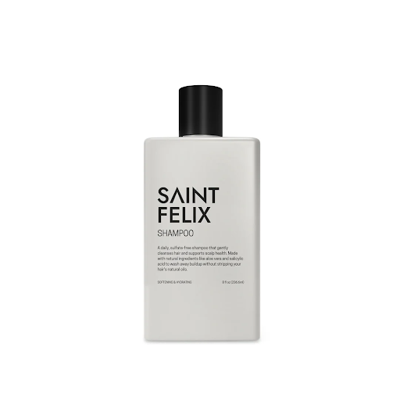
1. St. Felix Shampoo – Best for Early Thinning
St. Felix is what you use when you’ve caught thinning early and don’t want to speedrun the problem. It’s a simple, sulfate-free shampoo built on a gentler cleansing base that doesn’t strip the scalp or wreck the hair’s protective layer.
That matters more than most people realise. A lot of excess shedding, dryness, and scalp tightness comes from chronic irritation caused by harsh detergents. Removing that alone may often improve hair behaviour within weeks — and that’s exactly what St. Felix appears to do well.
This isn’t a regrowth shampoo and it doesn’t pretend to be. It’s a stop-doing-damage shampoo. If your goal is to preserve density and keep hair looking normal for as long as possible, it might just do its job.
Potential Pros
- Sulfate- and paraben-free
- Good daily shampoo for early thinning
- May improve scalp comfort and hair texture
- Doesn’t dry hair out over time
Cons
- Not designed for regrowth
- Low foam can feel odd if you’re used to supermarket shampoos
2. Mengine DHT Blocking Shampoo – Best for Hair Regrowth
If thinning is already obvious and DHT is clearly part of the picture, Mengine may be the most serious option here. The key difference is that they standardize their extracts, which immediately puts them ahead of most competitors.
Most shampoos list rosemary, hops, peppermint, etc., but don’t control the active compound levels. That makes them unreliable. Mengine actually locks in those levels, which may be why the formula behaves more predictably.
The focus here is reducing local DHT activity at the scalp while improving circulation and hair structure. Menthol aims to help with blood flow, biotin and proteins support strand strength, and the overall formula is built to do more than just clean.
This is still not a miracle product — but among shampoos, it may be one of the few that might actually move the needle if follicles are still alive.
Potential Pros
- Standardized DHT-modulating extracts
- Better consistency than most “natural” shampoos
- May help with density and thickness over time
- Suitable for most hair types
Cons
- More expensive than basic shampoos
- Needs consistent use — no quick wins
3. Philip Kingsley Density Thickening Shampoo – Best for Dandruff + Thinning
If thinning is happening alongside dandruff, itching, or a generally angry scalp, Philip Kingsley Density may make sense. Inflammation and flaking don’t just look bad — they may actively interfere with normal hair growth cycles.
This shampoo focuses on scalp correction first, not DHT. It uses piroctone olamine to control dandruff without stripping the scalp, and vitamin B5 to possibly improve moisture and give hair a fuller feel.
It won’t help much if your hair loss is purely hormonal, but if irritation is part of the problem, fixing that may improve shedding and hair quality faster than people expect.
Potential Pros
- Good for dandruff-related thinning
- Calms irritation and flaking
- May improve hair feel and fullness
- Suitable for frequent use
Cons
- Not aimed at DHT-driven hair loss
- Expensive for the bottle size
4. Toxique – Best for Thickening and Hair Quality
Toxique doesn’t really market itself to men, but formulation-wise, it may be one of the more competent shampoos on this list. Like Mengine, it standardizes its extracts, which already puts it ahead of some “botanical” shampoos that rely on vague ingredient names and hope for the best.
This one isn’t about aggressively going after DHT. It’s about improving hair quality. Argan oil, castor oil, and ginger extract appear to do most of the potential work here — strengthening the hair shaft, improving elasticity, and reducing low-grade scalp inflammation. If thinning hair also feels dry, weak, or brittle, this kind of formula may tend to show results faster than people expect.
It’s richer than most shampoos, which is both its strength and its weakness.
Potential Pros
- Standardized botanical extracts
- Could be very good for improving thickness and texture
- May help with dry, damaged, or brittle hair
- Doesn’t strip the scalp
Cons
- Can be too heavy for oily scalps
- Not focused on DHT
- Branding won’t appeal to everyone
5. Aveda Botanical Repair Shampoo – Best Vegan / Repair Option
Aveda Botanical Repair is here for one reason: repairing hair that’s been quietly abused for years. Heat, harsh detergents, over-washing, styling products — this is the shampoo you may want to use when thinning is compounded by damage.
It uses plant proteins and lipids to reinforce the hair shaft and smooth the cuticle. It’s not trying to block DHT or stimulate follicles. It’s just trying to stop hair from snapping, fraying, and looking worse than it should.
If your priority is clean ingredients and damage control, it may do that well. If you’re hoping for regrowth, this isn’t the tool.
Potential Pros
- Vegan, clean formulation
- May improve hair strength and manageability
- Gentle on scalp and strands
- Good for damaged or over-processed hair
Cons
- Expensive for what it does
- No DHT or growth focus
- Maintenance, not intervention
6. L’Oréal Serioxyl Shampoo – Best Supermarket-Level Option
If you insist on buying something that’s easy to find, Serioxyl is about as far as you should go. It’s better than most supermarket shampoos, but that may not be a high bar.
It focuses on scalp cleansing and short-term density through biotin and keratin. You appear to get cleaner roots and slightly thicker-feeling hair, especially if you use styling products or have buildup issues.
Long term, though, it’s still more aggressive than ideal for thinning hair.
Potential Pros
- Easy to buy
- Decent clarifying action
- May improve short-term fullness
Cons
- Still harsher than premium options
- Limited benefit for actual hair loss
- Can dry hair out over time
7. Umberto Giannini Grow Root Shampoo – Best for Breakage
This one is best viewed as a structural support shampoo. If your hair is thinning but also snapping, shedding through the lengths, or feeling fragile, breakage may be a bigger issue than follicle loss.
Caffeine and ginseng work to help with circulation, while biotin and keratin may reinforce the strand itself. It won’t do much for DHT-driven loss, but it may help you keep hair that would otherwise break off.
Potential Pros
- Reduces breakage
- May strengthen weaker strands
- Works well for longer hair
Cons
- Not aimed at hormonal hair loss
- Limited impact on regrowth
- Scent isn’t subtle
8. Nioxin System 2 Cleanser – Best for Early Recession
Nioxin is old-school, but System 2 still has a role. It’s a scalp-first shampoo designed to reduce buildup, improve circulation, and keep follicles unobstructed.
It doesn’t block DHT, and it won’t regrow hair, but it may often improve hair behaviour around the temples and crown if things are just starting to slide.
It works better as part of a routine than on its own.
Potential Pros
- Improves scalp environment
- Helps with early recession
- May reduce buildup around follicles
Cons
- Minimal DHT impact
- Best results require additional products
- Cost adds up over time
9. Pura D’Or Gold Label Shampoo – Best Gentle / Natural Option
Pura D’Or is what you use if you want something gentle that doesn’t actively make things worse. It includes mild DHT-modulating ingredients like saw palmetto and nettle, but the effects are subtle.
This is more about maintenance and scalp comfort than correction. It’s safe, mild, and unlikely to irritate – but it’s not powerful.
Potential Pros
- Gentle, sulfate-free
- Suitable for sensitive scalps
- May provide mild DHT support
Cons
- Results are modest
- Not enough for progressing hair loss
- More preventative than corrective
10. Hims Thick Fix Shampoo – Best Add-On Shampoo
This is not a standalone solution. It’s a supporting product meant to sit alongside finasteride or minoxidil.
It works to keep the scalp clean, includes saw palmetto, and doesn’t interfere with other treatments.
Potential Pros
- Works fine as part of a routine
- Easy if you’re already using Hims
- Doesn’t irritate the scalp
Cons
- Weak on its own
- Subscription model
- Not a primary solution
Final Thoughts
Shampoo won’t save your hair — but the wrong shampoo may absolutely accelerate its loss.
Most men wait too long, then expect too much. If follicles are still alive, using a shampoo that doesn’t inflame the scalp, strip oils, or weaken strands may be one of the simplest ways to slow things down.
- Early thinning → St. Felix
- DHT-driven loss →Mengine
- Dandruff / irritation →Philip Kingsley
- Texture and thickness →Toxique
Everything else appears to possibly fill a narrower role.
Consistency matters more than brand-hopping. Judge results over months, not weeks.
FAQ
Do hair growth shampoos really work?
Within limits: they won’t resurrect dead follicles, but they may reduce shedding, improve thickness, and support regrowth where follicles are still active.
How long before possible results show?
Texture and scalp comfort may improve in 2-4 weeks; visible density changes could generally take 3-6 months of consistent use. Your individual results may vary.
Which ingredients actually matter?
Standardized rosemary extract, hops, saw palmetto, peppermint/menthol, biotin, niacinamide, keratin – backed by biological mechanisms.
Are sulfates/parabens really harmful?
For thinning hair, they may be. They could disrupt the scalp barrier, increase irritation, and accelerate shedding over time.
Should I combine shampoo with finasteride/minoxidil?
If hair loss is genetically driven, yes. Shampoo alone isn’t enough; it supports but doesn’t replace targeted therapies.
Can these shampoos be used daily?
Most premium shampoos listed may be safe daily; some richer formulas may be better alternate-day depending on oiliness.
What if my thinning is due to dandruff/inflammation?
Addressing scalp health is critical. Formulas like Philip Kingsley or Nioxin may produce noticeable improvements in thickness once irritation is controlled.